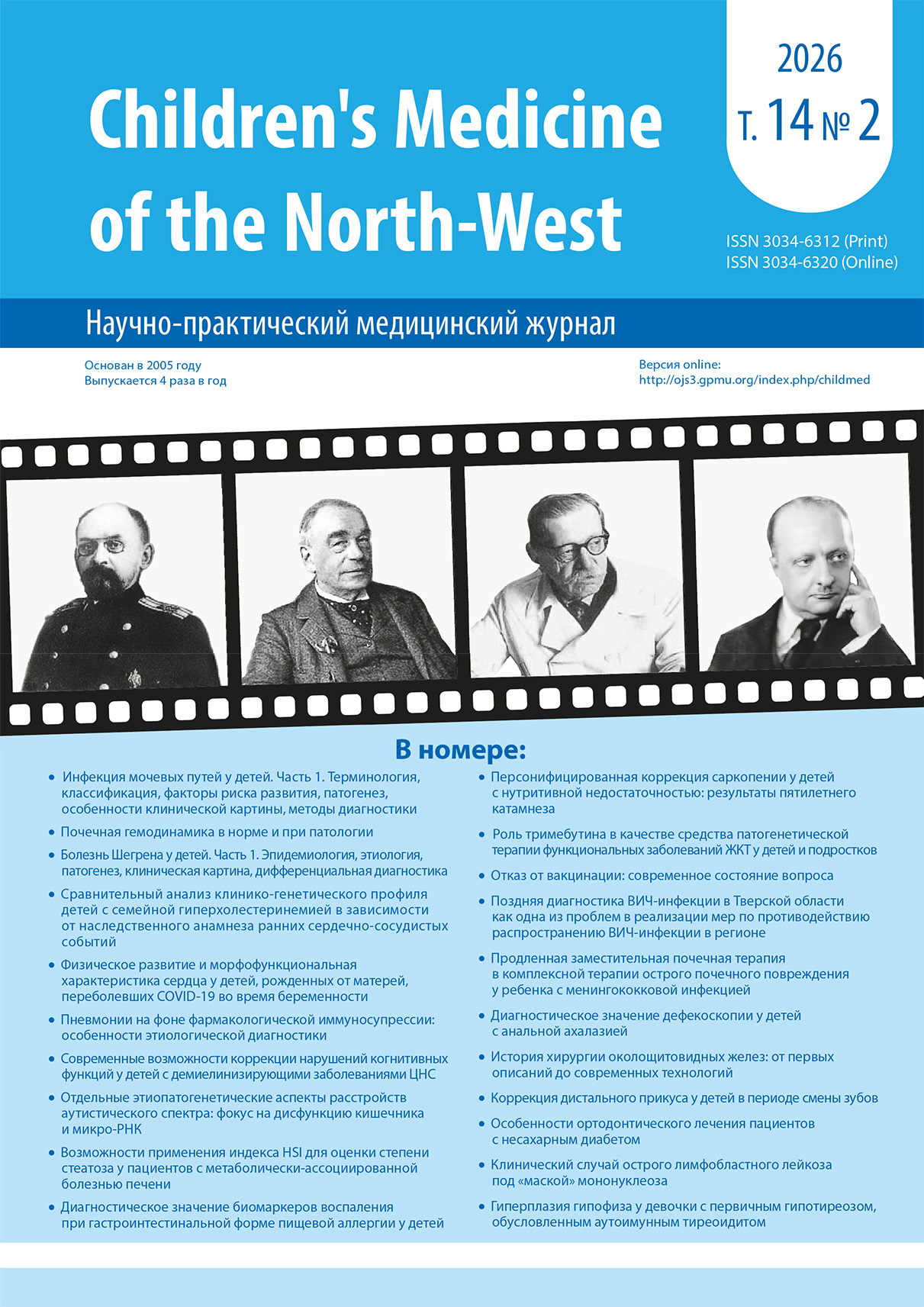
History of surgery of the parathyroid glands: from the first descriptions to modern technologies
SURGERY
Abstract
The article presents a comprehensive historical review of the establishment and development of parathyroid gland surgery, covering the period from the first anatomical descriptions to modern high-tech interventions. The evolution of scientific views is traced from the initial discovery of the parathyroid glands by R. Owen in a rhinoceros (1850) and their systematic description by I. Sandström (1880) to the understanding of their physiological role. The long journey toward understanding the pathogenesis of hyperparathyroidism is highlighted, including the contributions of F. von Recklinghausen, M. Askanazy, J. Erdheim, and the Russian pathologist A.V. Rusakov. The article describes the first operations, which were sometimes unsuccessful, and the development of surgical approaches. Special attention is paid to revolutionary changes in the late XX century: the introduction of sestamibi scintigraphy (1989), intraoperative parathyroid hormone monitoring (1991), and minimally invasive techniques (M. Gagner, P. Miccoli). The current stage in the development of parathyroid surgery is associated with the application of high-tech methods for diagnosing adenoma localization, as well as endovideosurgical and robotic techniques in the treatment of hyperparathyroidism. The article emphasizes that modern achievements have been made possible through centuries of continuity in scientific research.
References
1. Corvisard F.R. De la contracture des extrémités en tétanie. Thèse. № 223. F.R. Corvisard: Paris; 1852. 78 p.
2. Trousseau A. Clinique médicale de l’Hôtel-Dieu de Paris. Paris: J.B. Baillière; 1861. P. 112–114.
3. Chvostek F. Beitrag zur Tetanie. Wien Med Presse. 1876.Vol. 17. P. 1201–3, 1225–7, 1253–8, 1314–6.
4. Owen R. On the anatomy of the Indian rhinoceros. Trans Zool Soc Lond. 1862;(4):31–58.
5. Virchow R. Die krankhaften Geschwülste. Bd 3. Berlin: A. Hirschwald; 1863. P. 13.
6. Sandström I.V. Om en ny körtel hos menniskan och åtskilliga däggdjur. Upsala Läkarefören Förh. 1880;15:441–471.
7. Remak R. Untersuchungen über die Entwicklung der Wirbeltiere. Berlin: G. Reimer; 1895. P. 39–40; 122–124.
8. Gley E. Sur les fonctions du corps thyroïde. C R Soc Biol. 1891;43:841–847.
9. von Recklinghausen F.D. Die fibrose oder deformirende Ostitis, die Osteomalakie und die osteoplastische Carcinose in ihren gegenseitigen Beziehungen. In: Festschrift für Rudolf Virchow. Berlin; 1891.
10. Moussu G. Sur la fonction parathyroïdienne. C R Soc Biol. 1898;50:876–879.
11. Askanazy M. Über Ostitis deformans ohne osteoides Gewebe. Arb Pathol Anat Inst Tübingen. 1904;4:398–422.
12. von Eiselsberg A. Über erfolgreiche Einheilung der Katzenschilddrüse in die Bauchdecke und Auftreten von Tetanie nach deren Extirpation. Wien Klin Wochenschr. 1892;5:81–85.
13. Schlagenhaufer F. Über das Vorkommen epithelkörperchenartiger Geschwülste bei Ostitis fibrosa cystica. Virchows Arch Pathol Anat Physiol Klin Med. 1907;187(1):125.
14. Русаков А.В. Очерк патологоанатомического исследования 3-х случаев фиброзной остеодистрофии. Русская клиника. 1927;7(34):157–175.
15. Mandl F. Therapeutischer Versuch bei einem Falle von Ostitis fibrosa generalisata mittels Extirpation eines Epithelkörperchentumors. Zentralbl Chir. 1926;53:260–264.
16. Albright F., Bloomberg E., Castleman B., Churchill E.D. Hyperparathyroidism due to diffuse hyperplasia of all parathyroid glands rather than adenoma of one. Arch Intern Med. 1934;54(3):315–329.
17. Albright F., Reifenstein E.C. The parathyroid glands and metabolic bone disease: selected studies. Baltimore: Williams & Wilkins; 1948.
18. Coakley A.J., Kettle A.G., Wells C.P., O’Doherty M.J., Collins R.E. 99Tcm-sestamibi — a new agent for parathyroid imaging. Nucl Med Commun. 1989;10(11):791–794. https://doi.org/10.1097/00006231-198911000-00003.
19. Irvin G.L. 3rd, Dembrow V.D., Prudhomme D.L. Clinical usefulness of an intraoperative “quick parathyroid hormone” assay. Surgery. 1991;110(6):1028–1032; discussion 1032–1033.
20. Gagner M. Endoscopic subtotal parathyroidectomy in patients with primary hyperparathyroidism. Br J Surg. 1996;83(6):875. https://doi.org/10.1002/bjs.1800830656.
21. Miccoli P., Bendinelli C., Vignali E. et al. Endoscopic parathyroidectomy: report of an initial experience. Surgery. 1999;126(6):1077–1080.
22. Profanter C., Schmid T., Prommegger R., Bale R., Sauper T., Bodner J. Robot-assisted mediastinal parathyroidectomy. Surg Endosc. 2004;18(5):868–870. https://doi.org/10.1007/s00464-003-4272-3.
23. Stanbury S.W., Lumb G.A., Nicholson W.F. Elective subtotal parathyroidectomy for renal hyperparathyroidism. Lancet. 1960;1(7128):793–799. https://doi.org/10.1016/s0140-6736(60)90678-4.
24. Specimen L., Udelsman R., Citino S.B., Prasad M. et al. Parathyroid, thyroid and recurrent laryngeal nerve anatomy in an Indian rhinoceros (Rhinoceros unicornis). World J Surg. 2018;42:514–520. https://doi.org/10.1007/s00268-017-4325-8.